
You are currently browsing the category archive for the ‘Uncategorized’ category.
A lot of things are easier in the United states than in Mexico. Take for example, trying to get someone with a tractor and a disk to come out and work a field. In the U.S., when you need any kind of work done, you open the Yellow Pages and you can probably find at least a dozen listings of people or businesses that can do what you need to have done. Here in Oaxaca Mexico, not so much.
For the past month I have been looking for someone with a tractor to come out and disk a little field we have. Here you either have to know somebody who knows somebody that can do the job, or you need to get in a vehicle and drive around searching and asking. The first time I went out with my wife, Anita, looking in fields for a tractor working. If we would have saw someone, I would have parked the car and walked over to the tractor driver and asked him if he could come to the children’s home and do some work. We didn’t see anyone working in a field, but we did see a tractor at a gas station filling up with diesel. I pulled up beside him and asked him if he had time to come to our place and do some work. He said he was really busy and couldn’t come out. I asked him if he knew anyone that could come out. He said maybe the guy behind us could do the job. I looked behind me and to my surprise, another tractor had pulled up to get some fuel. With Anitas help, I asked this guy, if he could do some work for us. He said he was busy today, but tomorrow he could come out, but I would have to go to his house in the evening, bring him to the mission, explain to him what I needed done, then he could give me a quote on how much it would cost, and then he would come out the next day with his tractor.
I thought, “WHAT a hassle!” But I was desperate, so I agreed. Anita and I ran an errand and then returned to the mission. As we were turning off the main road, we saw this same tractor guy heading our way so we stopped and waited for him. He told us his big job for the day fell through and that he could work our field. I thought,”Praise the Lord!” I had asked God earlier in the day to help us find a tractor guy to come work today, and here he was. He plowed the field and then came back and disked the field. I was ready to plant grass seeds for a new section of our soccer field – except for one thing, part of the field was muddy, and the tractor left deep ruts and this would have to be fixed. The tractor guy said he would come back and fix that part of the field in a few days. I never saw him again. Typical of Mexico.
While I was waiting for him we had three weeks of rain. Now the whole field would have to be disked again. The search for a tractor driver began again. To my delight, a tractor guy began disking the field next to the mission. I walked over to him and asked him if he could spend and hour or so in our field. He said he didn’t have time. Bummer. A few days later the same guy was working in a field on the other side of the mission. Once again I approached him to see if he might have some free time to help us out. This time he said he might be able to come out Monday or Tuesday. I looked for him on Monday and Tuesday but he never showed. Double bummer.
The home for needy children is building an elementary school and has a full time worker engaged in the project. His name is Absalom and he lives close to the mission. I asked him if he knew anyone with a tractor who could come and work our little field. He told me he had a friend in the nearby town of Tanivet who might be the man for the job. Absalom told me where he lived and I went there in search of him. I found his place, but he was not there. Probably out with his tractor. Walking back to the mission van, I heard a tractor working nearby. I drove over to this guy and questioned him as to whether or not he could come to the children’s home and work for an hour or so. He told me he could probably come out between twelve and one. I was excited and waited in earnest for him the rest of the day, but him and his tractor were non existent to the mission.
I went back to Absalom’s friend the next day with Anita. Again he was not there, but we talked to the guys wife or mother, I’m not sure which. She said it would be best if Absalom called him and talked to him. This was last Friday. Absalom never takes a day off, but he took this day off. We went to his house, but his wife informed us that he was in the Sierras for the weekend, and she didn’t have the tractor guys phone number, but her next door neighbor, Guillermina, might have his number. As it happens, Guillermina and Anita are friends and used to work together at the mission cooking meals. We made our way to her house. She was glad to see Anita and went in search of the tractor guys phone number. She discovered his son’s number, but not his number. She tried the number twice but got no response. On Monday I asked Absalom to call his tractor friend. He tried a couple times but the guy didn’t answer.
I talked to Absalom before lunch and he finally reached his friend, who said he would come out at two o’clock and look at our parcel of land and give us a quote. Two o’clock came and then two-thirty and still no tractor guy. Anita and I had to leave and I asked Absalom to show his no-show friend what needed to be done, if he ever showed up, that is. I received a call from our mission administrator about 5 pm who informed me that the tractor guy showed up with his tractor and did the job. I couldn’t hardly believe it. At long last the field was almost ready to be planted. It seemed almost a miracle to me, and I gave thanks immediately to God that the job was done, and later to Absalom for helping us out.
So what is the point of this tractor tale? What does all this have to do with believing that God loves us and wants us to be happy? During this tractor search period I looked frequently at the field that was fast filling up with weeds and I would thank God that we hadn’t been able to find a tractor guy to come and till the field. That was my only option if I really believe that God loves me and wants me to be happy. I believe that God knows better than me, that His ways are not my ways, and that His timing is better than mine.
So the project, any project really, is more in His hands than mine. He allows me to cooperate with Him, but I have to trust Him, that He will do His part when the time is right, not when I think the time is right, then I can do my part. Sometimes God lets us in on the reason behind the wait, but more often than not, His perfect timing remains a mystery, and all we do is to glorify Him and enjoy Him, and know that all things work together for good to those who love Him and are called by Him. So what should we do when we are in a tight spot, and all our efforts seem in vain when we try to move ahead? We should say, “Thanks God! You make all things beautiful in Your Time, and in Your Perfect Way. I will do my best, pray that it’s blessed, and trust You to do the rest.”
***** ***** ***** *****

The weather today in Oaxaca, Mexico, is perfect. It is a gorgeous day. Lots of blue sky and sunshine. I love it. It hasn’t been like this for about three weeks. It has been cloudy and rainy. This morning I was talking to God about this beautiful day, or rather He was talking to me about it. He asked me if I liked the weather today. He asked me if I was happy. He asked me if the sunshine and blue sky made me happier than normal. I answered in the affirmative each time. He asked me if I had been taking the nice weather that we had been having in March, April and May for granted. I had to admit it. While most of the U.S. had been suffering unusually cold weather and lots of snow, we here in Oaxaca were enjoying temps in the 80’s and 90’s most everyday.
The point that God was making is that we have a tendency to take too many good things, too many blessings, too many gifts from the generous hand of our benevolent God, for granted. We don’t always acknowledge and thank God for simple things that make us so happy, like good health, delicious food, pure water, clean air and the ability to breath it. When, for some reason, God withholds these basic goodies, we are likely to complain and grumble. The apostle Paul admonishes believers over and over to give thanks to God, not just when we are fat and happy, but even in the lean times, for God is good all the time, and he always loves us and wants us to be happy.
I’m convinced that many times God withholds some blessings from us so that when they return to us we are happier than we were before. Take for example sickness. I hate being down with a cold or the flu. We all do. How thankful and full of joy we are when the sickness passes and we are feeling fine once again. Sometimes we even feel worse when a loved one is ill. My daughter’s, Sally and Kelly, had fevers and were coughing a lot last week and had to miss a few days of school. No parent likes to see their children suffer in any way, especially with an illness. After a visit to the doctor and taking some medicine they were feeling fine, and so was I. I wasn’t taking their good health and health care professionals for granted. I was thanking God for both, and was (and am) Happy for both.
My wife, Anita, has explained to our daughter’s about the importance of thanking God for all the food we have and eating everything on their plate, be cause there are a lot of poor children in the world who search through garbage dumps for something to eat. Our youngest daughter Kelly has taken this to heart and almost always asks to pray before meals. In her simple, four year old way of praying, she thanks God for our meal and also that she does not have to eat trash.
So right now I am basking in the sunshine with a heart full of joy, praising our heavenly Father for the sunshine, and also for the eternal Sonshine that floods my soul. I also need to ask forgiveness for all the times that I take for granted the incredible goodness that is always flowing from the hand of God. I ask God to remind me, that in those times when I feel something is lacking, that He is my Good Shepherd, and that in reality, I am never in need.
***** ***** ***** *****
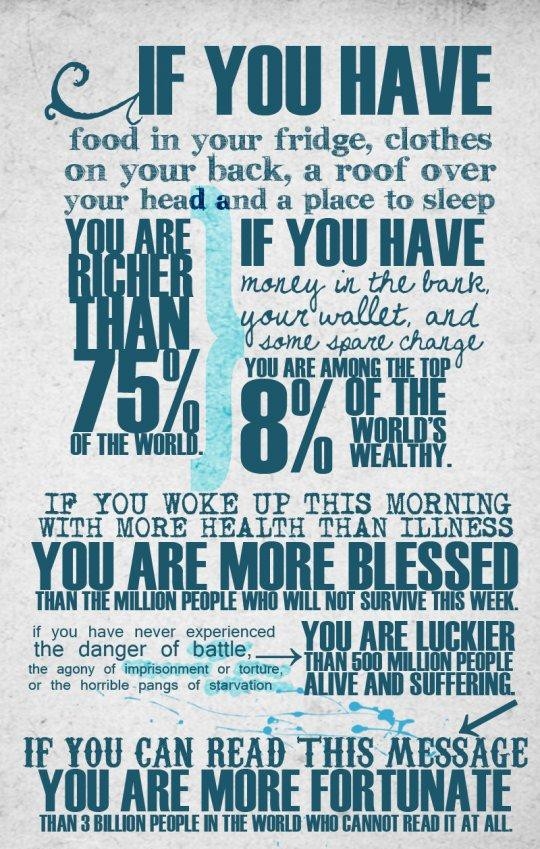
So who does the spiritual heavy lifting in our lives? God or us? I ask that question because when I read the Bible, sometimes it seems God is doing most of the work, and other times it looks like the onus is on us. For example, Sunday morning I was reading Psalm 119. One section was about God doing it all and a following section was about the followers of God doing everything. Here are the two sections.
God
vs. 33 – Teach me LORD, the way of your decrees.
vs. 34 – Give me understanding
vs. 35 – Direct me in the path of your commands, for there I find delight.
vs. 36 – Turn my heart toward your statutes and not toward selfish gain.
vs. 37 – Turn my eyes away from worthless things; preserve my life according to your word.
vs. 38 – Fulfill your promise to your servant
Followers of God
vs. 44 – I will always obey your law
vs. 45 – I have sought out your commands
vs. 46 – I will speak of your statutes
vs. 47 – I delight in your commands because I love them.
vs. 48 – I reach out for your commands, which I love
A couple of verses in Paul’s letter to the Philippians helps me see this quandary in a better light. Paul writes in chapter two, “work out your own salvation with fear and trembling – for it is God working in you to accomplish his good will.” This verse tells me, that at the heart of the matter it is not all God, nor is it all us. God invites us to cooperate with him in our spiritual growth, our sanctification, our development of spiritual fruit and use of spiritual gifts. God does most of the hard work when it comes to accomplishing great things or triumphing in hopeless situations. Many times he just invites along for the ride.
Three accounts from the Bible come to mind. The first is the story of Gideon. God invites Gideon to cooperate with him in the defeat of the Midianites, a powerful people bordering Israel. The Midianites have a huge army and constantly harass and ravage the Jewish people; plundering their towns and stealing their crops. God taps Gideon on the shoulder and tells him that he will be a great leader. God will lead Gideon, and Gideon will lead an army to victory over the Midianites. His first job is to rid the land of idols, starting with his own community. His own community is not very happy about this and want to kill Gideon. Finally they come around and decide to follow him into battle against the enemy. Eventually they raise an army of about 20,000 men, which doesn’t seem like much when you consider the Midianites had an army of 100,000 plus. For God, Gideon’s army was too big and it gets whittled down to 10,000 and then to 300. Sometimes when you cooperate with God, less is more, in order that when the miracle occurs, God gets the glory! The armies are facing each other, ready for battle-300 vs. 130,000. Kinda seems like long odds and an impossible situation. And it was – for the Midianites! When God is on your side, and you are on God’s side, cooperating with him, it is the enemy that has no hope. The Midianites were routed, retreated and demolished. That’s what happens when God invites us to participate in his vision and we follow him into battle.
The second account is that of King Hezekiah. King Hezekiah was King of Judah and had his headquarters in the capital city of Jerusalem. Jerusalem was fortified with strong, tall walls, which was fortuate for Hezekiah and his people, because the Assyrian Army had surrounded Jerusalem and were finding it difficult to get inside. This didn’t stop the Assyrian soldiers from issueing threats to the captive citizens of Jerusalem. They demanded that the Jews surrender. If they didn’t, they would eventually invade the city and kill the inhabitants. In essence they were saying, “Don’t make us come in there!”
The king of the Assyrians was Sennacherib. He and his army had come in from the north, smashing things, killing people and conquering nations. Now Judah, Jerusalem and Hezekiah stood in his path of destruction. He sent a letter to King Hezekiah telling him to surrender and things would go better for him and his people, rather than if his army had to break down the walls to get in. He also declared to Hezekiah that the God of the Jews would not be able to overcome the god of the Assyrians. “Our God can beat up your God” Sennacherib seemed to be saying. Sennacherib boasted of the nations and their gods that he had defeated so far, and was confident that he would do the same to the nation of Judah and their God.
When Hezekiah read the letter he went to the temple, spread the letter out before God, and began to pray. First, Hezekiah addressed God as the Almighty God who created heaven and earth and who is God over all kingdoms. Second, Hezekiah told God that Sennacherib was ridiculing the living God. Third, Hezekiah was realistic with God about his problem and the accomplishments of the Assyrian kings. Fourth, he asked God to intervene and deliver the Jews so that all the kingdoms of the earth would know that the LORD alone is God.
When we are facing a big problem that seems impossible for us to overcome, sometimes all we can do to cooperate with God is to pray and trust Him to resolve the situation. We would do well to pray like Hezekiah. First, recognize who God is – All Powerful and Good to His People. God is bigger than our problem. Second, that the problem might indicate to those around that God is not All Powerful and Good to His People. Third, be realistic with God about the problem. God already knows every detail of the problem, but when we bring it before Him, we are acknowleding our dependance on God to intervene in the situation. Fourth, ask God for help. I heard a story about one lady who had recently become a Christian, and she told her friends that she only had two prayers, “Thank you, Thank you, Thank you” and “Help me! Help me! Help me!” Sometimes all we can do is cry out for help.
King Hezekiah woke up the next morning and there were 185,000 dead soldiers on his doorstep. 2 Kings 19:35 says that in the night the angel of the LORD went out and put the soldiers to death. Deliverance! Sometimes all we can do to cooperate with God in our hour of tribulation is to pray, and sometimes that is enough.
The third account that comes to mind is Jesus raising Lazarus from the dead in John chapter 11. A bad problem turns into an impossible situation, and then Jesus asks some people to cooperate with him in accomplishing and impossible work.
Lazarus is very sick and needs his friend Jesus to come and heal him, as Jesus has done thousands of times before with other sick people. Instead of rushing to his bedside, Jesus stays away for a couple of days before making the long journey to Bethany. At Bethany he encounters his grieving friends, Mary and Martha, sisters of Lazarus. Mary and Martha are upset at Jesus and say to him, “Our brother wouldn’t have died if you would have gotten here sooner!”
Jesus goes to the tomb, which was a cave with a stone laid across the entrance. It is here that Jesus invites the mourners to participate with Jesus in a miracle. He tells them to roll away the large stone. Martha objects, telling Jesus, “Lord, by this time there is a bad odor, for he has been there four days.”
Two things about Martha’s statement: 1, she says he has been dead four days, which is signficant because the Jews believed the spirit of the person hung around the body for three days, making it possible for them to renter the body. Lazarus has been dead four days, making the death seem eternally permanent. So, for the mourners and crowd, Lazarus’ resurection was indeed impossible. 2, When Jesus asks us to cooperate with him in miracle making, sometimes it’s hard work, like rolling the stone away, and, sometimes it initially stinks. God may ask us to do something unpleasant, disagreeable, out of our comfort zone. It might stink physically, mentally or emotionally. But when we trust God, do what he says, incredible things can happen! Once the stone was rolled away, Jesus prayed to the Father, and then spoke to Lazarus, saying, “Lazarus, come out!” Lazarus came out and the people were amazed.
God came through in an impossible situation once again. When we as individuals or as a community of faith face seemingly impossible situations, whether they be financial, familial, or physical, we don’t have to do the impossible by ourselves. We can invite God into our situation, and he will invite us to cooperate with him in resolving the problem, sometimes working a miracle.
***** ***** ***** *****

“Miracles are a retelling in small letters of the very same story which is written across the whole world in letters too large for some of us to see.”
“Give us this Day our daily bread. Forgive us our sins as we forgive those that sin against us. Deliver us from the Evil One; save us from the time of trial.”
In Christianity we talk about salvation. It’s not uncommon when one Christian meets another Christian for the first time, to ask, or to be asked, “When we’re you saved?” Sometimes, when asked this question, I want to say, “Today.”
Of course we understand the meaning of the question – When did you begin to trust in Jesus with your life and experience salvation from Sin? Some people can remember the day and hour that they were “saved”. Other people, like me, can’t remember an exact time or place that “salvation” occurred, because we were brought up in the faith and as far as we can remember, we always believed that God loved us and that Jesus died for our sins and rose again so that we could have eternal life. That was me. Sure I remember a time when I was about five years old and said “the sinners prayer” at Vacation Bible School, but I trusted in God’s saving grace before that, even though I had never verbalized it in such a formal way. Later at age eight an evangelist came to our little farmhouse in Colorado and talked to my parents and my sister and I about “salvation” and once again I prayed a prayer that he wanted me to pray, which I prayed as sincerely as I could and seemed to make everyone happy.
Some people are looking for a great emotional experience when they talk about salvation. I had one of those as well at Summer Bible Camp one year when I was about 12. I cried and then felt spiritually “high” for about a week afterwards. It was a wonderful experience that I will never forget.
Some years later I began attending Bible College and experienced other spiritual, emotional and mentally transforming times that had, to various degrees, an impact on my life. In one sense or another, these were all “salvation” experiences. I was “saved” each time. Sometimes I was saved from Sin, other times I was saved from sins. The ultimate Salvation is being made righteous in the sight of God. Other times salvation is a changing of a wrong attitude, or an incorrect perspective on some aspect of life. Sometimes we are saved from an unforgiving spirit. In short, some of us need to be saved everyday! Especially me.
The greatest commandments are not things we shouldn’t do, but things we should do. “Love the Lord your God with all of your heart, mind soul and strength. Love your neighbor as yourself.” If we disobey God’s commandments we sin. Not a day goes by when I am apathetic in some way or another to those around me. Not a day goes by but that I turn a deaf ear or a blind eye to the needs of my wife, children, brothers and sisters in Christ, or strangers that cross my path. Many times I am much more like the priest and levite that ignored their fellow man in need, than I am like the good Samaritan who showed compassion on the poor man lying naked in his own blood along the road. By neglecting my neighbor I am also neglecting God and disobeying his commandment to love him with my entire being. Truly I need to be saved everyday.
Martin Luther has said that we are continually struggling against the World, the Flesh and the Devil. That is why Jesus taught us to pray daily to be delivered from the Evil One. Satan prowls around like a hungry lion, seeking to destroy and kill us- mentally, spiritually, socially and physically. Our flesh and the world are bent toward sin, thus when we pray to be saved from the time of trial, we are praying for God’s power and intervention in our daily lives. We are asking him to maintain a hedge of protection around us, our family and our community of faith. Indeed we need salvation everyday.
***** ***** ***** *****
Oh, what’s going on inside of me?
I despise my own behavior
This only serves to confirm my suspicions
I’m still a man in need of a Saviour
Charlie Peacock
This morning I was thinking about the history of mankind, from Adam and Eve, to the new heavens and earth, and new Jerusalem. From Genesis to Revelation. I was thinking about the high points and low points; the great positives and negatives. The first great positive was the creation of Adam and Eve. The first great negative was the fall of Adam and Eve, and thus, all mankind.
In my mind there was a timeline, with blips to indicate the highs and lows. In the middle of this time line was a the highest positive blip, signifying the death and resurrection of Jesus. The greatest negative down blip was the fall. The next biggest negative blip was something I read in 1Samuel 7. The Israelites come to Samuel and tell him they want a king, like all the other nations. Samuel, who was the spiritual leader at that time felt rejected and went before God. God tells him not to worry, that the people have not rejected Samuel, but have rejected God.
That is huge! Almost as huge as Adam and Eve ‘s falling to the temptation of the serpent, with similarities. Adam and Eve rejected God’s command because they wanted to rule themselves. The Israelites rejected God because they wanted a human king to rule them, rather than the King of Kings and Lord of Lords. Both great sins came down to pride, arrogance and greed. Both entities felt that God had given them the short end of the stick; that God didn’t really love them and want them to be happy. They believed that they could be happier doing things their way.
God has always wanted and chosen a people to be his own. A people who would love him, follow him and do his will. A people that he could bless, reveal himself to, and make happy and prosperous. A people who would respond to his generosity by being generous themselves, both to God and their fellow man. Thus, the second up blip on the historical timeline is God’s call of Abraham. God did not call Abraham only for Abraham’s sake, but so that Abraham would be the father of a nation who God could call his own. Through this man and this nation, God would bless all the people on earth.
This group of people would be initially called Hebrews. The Hebrews were enslaved by the Egyptians. God delivered these people from slavery in a miraculous way. This is the third high point in the history of mankind and pointed to the ultimate high point in history when God would set people free from slavery to sin through Jesus death and resurrection.
The next high point after being set free from bondage in Egypt followed closely on the heels of this miraculous event. This was the giving of the law on mount Sinai. God was saying to his chosen people, “I love you and want you to be happy, so I am giving you these laws, precepts and commands. If you continue to follow me by obeying these mandates, I will prosper you and you will be truly happy and will experience shalom. Slalom was a word the Jewish people used then to greet one another. It meant peace, prosperity, and joy.
Next followed a low point where the people showed they didn’t really believe that God loved them and wanted them to be happy. When it came time to possess the land flowing with milk and honey, they balked. Ten bad spies gave the report of giants in the land that made the Hebrews look like grasshoppers in comparison. Two good spies said the enemy was indeed large, but our God, who delivered us from the Egyptians is the real giant that will go before us and conquer the enemy. The Jews didn’t trust God and thus had to wander in the wilderness for forty years until the unbelieving generation died out and a believing generation rose up.
The believers went in and took the promised land. A definite high point.
The next century was filled with high blips and low dips as God’s chosen people alternatively worshiped and obeyed God, and then fell away and were disobedient. This cycle continued through the period of the Judges and then the kings. Finally, an awful low point occurred when first the ten tribes of Israel were conquered and taken into captivity by the Assyrians, and then Judah was humiliated by the Babylonians and taken into exile.
The prophets had warned the people of Israel and Judah that if they didn’t change their hearts and their ways that God would punish them and send them into exile. They didn’t and he did. The prophets also told of a time of restoration that would come. They told of a new covenant that would be written on hearts of flesh rather than tablets of stone. Daniel foretold of a Son of Man who would come into the world and inaugurate a new era; a new way to relate to God; a new way to experience peace and happiness.
The Son of Man was Jesus. He used the title Son of Man to refer to himself more than any other title. The incarnation of the Son of God, the Son of Man, was the high point on the time line of mankind. God with us, the beginning of the end. The end of the God’s presence in the holy temple in Jerusalem, along with the sacrificial system involving the blood of bulls and goats and lambs. The Lamb of God was the ultimate sacrifice that made a way for all mankind to receive forgiveness of sins, liberation from the bondage of Sin, and to enjoy God forever.
The ultimate high point will be the day when God creates the New Heaven and New Earth and the New Jerusalem comes down from heaven. God’s radiance will be our light, and his presence will be our joy. We will enjoy Him, evermore free from tears, pain, loss, suffering and grief. All will be glory and peace, and that is the point in mankind that I am looking forward to. Come quickly!
***** ***** ***** *****
I have been enjoying Paul’s letter to the Colossians for the last month or so, and the idea of thanks, thankfulness and gratitude keeps popping up. Seven times in four chapters. Some say Philippians is a book whose theme is joy, because the words joy and rejoice are prominent. I think it’s safe to say Colossians is a book whose theme is thanks. See what you think.
Colossians 1:3
We always thank God, the Father of our Lord Jesus Christ, when we pray for you, because we have heard of your faith in Christ Jesus and of the love you have for all God’s people.
A Good Start
Paul starts most of his letters with a word or prayer of thanksgiving for the recipients, and the Christians in the church in Colossae were no exception. Paul had never visited that church, but they had a great reputation for their faith in Jesus and for loving God’s people. What if we started everday with a prayer of thanks for God’s people? All of God’s people – even those we don’t get along with, those who think differently than we do, those who offend us. Paul had to deal with all those types in his letter to the Corinthians, but he starts his letter to them by saying, “I always thank my God for you because of his grace given you in Christ Jesus.” A great way to start a letter and a day.
1:12
(We are) giving joyful thanks to the Father who has qualified you to share in the inheritance of his holy people in the kingdom of light.
Joyful Thanks
Paul is not just thankful, but for the second time in his prayer, he (and Timothy) give joyful thanks to the Father. He is full of joy as he gives thanks because he knows that these believers in Colossae, whom he has never met, are in the same boat with him with regards to being graciously chosen by God to share in the inheritance and to be brought into the kingdom of light. Certainly something to give joyful thanks about.
2:6-7
So then, just as you received Christ Jesus as Lord, continue to live your lives in him, rooted and built up in him, strengthened in the faith as you were taught, and overflowing with thankfulness.
Overflowing With Thankfulness
First Paul gives thanks, then expresses joyful thanks, and this escalates to overflowing thankfulness. Considering a persons life in Christ, rooted in Christ, built up in Christ, and strengthened in the faith, it should be a natural reaction to overflow with thankfulness. I think of water being poured into a glass, and I have to ask myself, what is my level of thankfulness. Is it about 1/3, 2/3, full, or overflowing? Too many times I have to say 1/3 or 2/3. On a good day it may be full. God help me to truly realize the blessings of a life lived in Christ, and to overflow with thankfulness.
(the peace of Christ, the message of Christ, the name of Christ)
3:15
Let the peace of Christ rule in your hearts, since as members of one body you were called to peace. And be thankful.
Thankful For the Peace
God gives a peace that passes all understanding to those who invite God to sit on the throne of their life. He gives that peace so that we can enjoy personal contentment, but more importantly, to enjoy peace with members in our communities of faith. The peace He gives is more than just the absence of conflict. It is a sense of completeness, wholeness, health, safety, tranquility, rest, prosperity, and harmony. This extends from the individual to the entire community of Christ. Psalm 133 says, “How good and pleasant it is when God’s people live together in harmony.” Truly something to be thankful for.
3:16
Let the message of Christ dwell among you richly as you teach and admonish one another with all wisdom through psalms, hymns, and songs from the Spirit, singing to God with gratitude in your hearts.
Grateful Hearts
When the message of Christ dwells richly in individual hearts and corporately in the community of faith, then singing, and shouts for joy full of gratitude will be heard. A thankful heart is a happy heart.
3:17
And whatever you do, whether in word or deed, do it all in the name of the Lord Jesus, giving thanks to God the Father through him.
Do it All
Have you got something to say? Then say every word in the name of the Lord Jesus, as if He were saying it through you. Have you got something to do? Then make every action count, as if Christ were working through you. It’s amazing that God has chosen any of us to cooperate with Him in building the kingdom with our words and deeds. Thank you God for allowing us to partner with you with our lips and with with our hands in making this world a better place.
4:2
Devote yourselves to prayer, being watchful and thankful.
A great Ending
Paul set the example in the first chapter. He prayed for the Colossians. He thanked God for them. Paul was ever watchful, alert for stories of Christ followers living lives of faith, hope and love. He heard about these Colossian Christians and was grateful for their lives, their words and their works. Now in the last chapter, Paul admonishes them to follow his example by being devoted to prayer, watching for good gifts from a gracious God, and being thankful.

I went to two different bible colleges from 1981 to 1986. Bethany Bible College close to Santa Cruz, California, and Central Bible College in Springfield, Missouri. After five long years I was ready to graduate. Graduation was in May, a beautiful Spring day in the Ozarks. My parents were there from Colorado, sitting in the audience. I was wearing my black cap and gown, seated with the graduating class of 1986. The time finally came for us to walk onto the stage and receive our diplomas, which had been put into a diploma holder. Then the age old graduation tradition took place. I shook a hand and took the diploma holder and walked back to my seat. After the caps had flown and the photos were taken, I opened the diploma holder and looked in. It was empty. No college graduate diploma for me.
I knew it would be empty. The powers that be at Central Bible College had told me that I lacked two credits to receive my diploma. I needed to take a class called Modern Cults and then I would have a piece of paper in my hands declaring to the world that I was truly a college graduate with a b.a. degree in Missions. In the meantime, they informed me, that I could walk the line and participate in the graduation ceremony.
That was over 25 years ago. I had always intended to pick up those two measly credits somewhere along the way and get that diploma, but it just never happened. I ended up moving back to California with my first wife and two young daughters and began working with a youth group while working a full time job. The diploma and Modern Cults and CBC took a backseat in the car of my life, and then a backseat on the bus of my busy existence, and finally disappeared off the radar.
I ended up getting a divorce and changing denominations, moving from my Assembly of God upbringing and college education, to the Lutheran way of following God. The importance of having an AG/CBC college diploma was the last thing on my mind. My life continued on and not having a diploma never kept me from doing what I wanted and having jobs that I enjoyed. I was a driving instructor and a gardener. Teaching people and caring for plants was what I loved. I did that in California and I do that now at a home for needy children here in Oaxaca,Mexico.
For some reason, I recently began thinking of that diploma that I never received. I’m not sure what psychological button was pushed in my being these last few months that made me think it would be kinda nice to have that piece of paper in my hands. I always told myself that I went to Bible college to gain knowledge and get a good foundation for growing spiritually, both of which were accomplished. But something was telling me to get that diploma, if for nothing more than to put a period (or exclamation mark) to that era of my life. I started something and decided I wanted to bring it to a successful conclusion.
So a couple months ago I sent an email to CBC and inquired if there was an online course that I could take to get those two credits and get my diploma. I mentioned that I was serving at a mission in Mexico helping needy children and that it would be difficult to get away to Missouri to take a class.
I didn’t hear back from them and decided it was a lost cause. Then last week I received an email from Kathleen Harris in Records and Registration at CBC. She informed me that she had looked into my case and examined my records. She informed me that I needed 126 credits to graduate, and that with other classes I had taken from other colleges, I actually had 137.5 credits. But, to receive a degree in Missions, my declared major, I needed the course Modern Cults. She also mentioned that CBC was in the process of merging with two other AG institutions and that CBC was authorized to give out diplomas until May,2014, and that despite the fact that I had not taken Modern Cults, they were going to substitute one of the other classes I had taken for Modern Cults and give me my diploma. I was an official graduate of Central Bible College. The diploma was now in my file and the only question that remained was where to send the diploma.
I must admit, tears came to my eyes when I read that last line. I don’t know why it was such an emotional moment for me, except that it was significant for me that a process that began so long ago had finally come to an end. I also felt overwhelmed by Grace-God’s Grace and the grace of Central Bible College. I thought of Mike Yaconelli and his book Messy Spirituality.
Mike Yaconelli tells a story of how, when he was eleven years old, he had a paper route. He saved up his money to buy something special. One day he saw that something special that he had to have. A beautiful conga drum. He went to his bank, took out $20 and bought the drum. He was so proud that such a beautiful thing was all his. He took it home to show it off to his family and friends. His dad was not a happy camper and demanded to know how much it cost. Mike told him, “$20.” His dad told him to take it back!
Mike writes, “For reasons I don’t really understand, the trauma of that experience burned itself deep into my soul. Emotionally, I was crushed.” Forty-seven years later he was at a spiritual retreat with his son. He told the group about his conga drum experience. He hadn’t planned on sharing this story, it just kinda came out. Of course his son had heard the story before. After telling the story, Mike sat down to prepare for communion. The chapel was hushed. All of a sudden, his son got up, and stomped to the front of the chapel, making a lot of noise. Then he disappeared behind a big podium, and finally stood up, holding a large, shiny new conga drum. Mike writes, “Tears filled my eyes as I sat there, stunned.” His son had bought the conga drum earlier and planned on telling the drum story and then presenting it to his dad. When Mike began telling the story, his son realized God had orchestrated the morning far beyond anyone’s expectations. Mike waited almost half a century to be graced with a conga drum. I waited over a quarter of a century to by graced with a diploma. God makes everything beautiful in His own time. Thanks God!
***** ***** ***** ****
On top of the bookcase behind me sits the conga drum. Forty-seven years is a long time to wait, but the waiting is over. Each time I look at it, my heart laughs over a God who conspired to make sure I understand forever his fathomless grace. Every day, I hear him whisper, “I’ll never take back my grace!” I hope you hear him whispering too. Michael Yaconelli in Messy Spirituality
These are the three things that make up our lives. What we do; what we want to do; what we should do. Sometimes, rarely for me, they are all the same thing. There is usually a bit of tension, or a lot of tension, between these three things. Some would argue that there is no difference between what we do and what we want to do. They say that people always do what they want to do. If people wanted to do something else, they would do it. They really don’t want to do something else, or they would do that instead. I think that is true to some extent, but I also believe that there can be, and usually is, a struggle within our being of what we are doing in various situations, and what we would rather be doing. That struggle is normally between our minds and our hearts. Between our intellect and our desires.
Think of your job. Most people don’t really like their jobs, or if they do like their job, they can think of a different job that they would rather be doing. I read a quote recently that said, “Choose a job you love and you will never work a day in your life.” I love that quote. I think most of us can relate to, and even applaud the sentiment that is expressed. If you love doing your job; if you wake up every morning looking forward to doing your occupation, then it seems more like play or an adventure than “work”. You Do your job because you Want to do your job.
That is just one example of the tension many people encounter with doing something, and wanting to do that thing. In most areas of life, from finances, to social life, to what we do in our leisure time, we can experience an inner struggle between what we are doing and what we want to do.
And, if the struggle between what we do and what we want to do is not enough, there is always another element to consider – What we Should do.
Consider the job example. Perhaps a person has a job to do, a job they want to do, but there is a gnawing inside them that they should be doing something else. They look at their job, and experience a certain amount of joy and satisfaction from that job, but occasionally they ask themselves, “in the end, Does it really matter? Does it make a significant difference to anyone? Am I alleviating pain and suffering for anyone but myself? Am I helping to end world hunger or bring about world peace? Am I doing anything to make the world a more beautiful place for anyone but myself and my family? Should I really care about those things? Ought I to concern myself with anyone but me? And if so, Why?”
I believe that God loves us and wants us to be happy. In his word to us he tells us many things that we should do. Things that will make us happy. He created us thus he knows what makes us happy. All the things that we should do to be happy fall into two broad categories; love God with all our heart, mind, soul and strength, And love our neighbor as we love ourselves.
Think about when you fell in love. Normally when we fall in love, we think about our boyfriend or girlfriend all the time. We want to be with them all the time and can’t wait to receive a text message, email, phone call or letter from him or her. We hang on every word from our beloved. We give them cards and flowers and little gifts and big gifts. We talk and talk and talk and love being together. We do these things. We want to do these things. We should do these things. It makes us happy to make them happy.
The same thing should happen with God. He created us to be sublimely happy, full of joy, when we are in right relationship with him. When we are spending time with him, reading his love letter to us, the Bible. Our joy is increased when we are loving those in the community of faith as we love ourselves. Our joy or happiness is complete when we venture into a hurting world and bring spiritual, physical and mental healing.
These things SHOULD happen with God and with others, but many times they don’t happen. Martin Luther said that we struggle on a regular basis with the World, the Flesh, and the Devil. These three enemies do not want us to love God and our fellow man. They do everything in their power to keep our focus and energy and devotion on ourselves.
Do you struggle with the World, the Flesh, and the Devil? Do you feel a tension within between what you do, what you want to do, and what you should do? I do. And you know what? We are in good company. The apostle Paul also battled. In his greatest theological letter, the one he wrote to the Romans, he takes up a whole chapter talking about his personal struggle. This mighty warrior of the faith, this saint of God, could have just left this portion of his epistle out, and it still would have been his greatest literary work. But thank God he included it. By writing the words that we call Romans seven, He lets us know that it is normal to struggle with what we do, what we want to do, and what we should do. Here’s the way he puts it:
For I do not understand my own actions. For I do not do what I want, but I do the very thing I hate.
Now if I do what I do not want, I agree with the law, that it is good.
So now it is no longer I who do it, but sin that dwells within me.
For I know that nothing good dwells in me, that is, in my flesh. For I have the desire to do what is right, but not the ability to carry it out. For I do not do the good I want, but the evil I do not want is what I keep on doing. Now if I do what I do not want, it is no longer I who do it, but sin that dwells within me. Romans 7:15-20
So this a normal human struggle, especially for a Christian who is trying to keep the commandments, who really wants to love God with all his or her being and really wants to love his or her neighbor as he loves himself or herself. We find ourselves failing to meet this goal everyday, if not every hour. It’s normal. It is also normal to beat ourselves up about our failures. But it is not acceptable to condemn ourselves. Paul goes on to say in Romans eight that there is no condemnation from God for those who walk in the Spirit and not in the Flesh. Walking in the Spirit doesn’t mean we don’t struggle, it means our goal in life is to love God and seek him first. It means that we recognize our frequent failures and go regularly to our compassionate heavenly Father asking for forgiveness today and strength and insight for tomorrow to win more battles than we lose against the world, the Flesh, and the Devil. We ask Him to open the eyes of our hearts to the reality of What we do, What we want to do, and What we should do.
***** ***** ***** *****




***
I have been teaching gardening classes to various groups of elementary students from Oasis elementary school here at the home for needy children in Oaxaca,Mexico, for the last year. As I have been teaching and developing my curriculum, one number keeps popping up over and over. The number three. I try to relate gardening and plant needs to our everyday life and our needs as humans. Below is a list of the “threes” that I have been teaching.
Three things we want from a garden-
Order, beauty, abundance
Three things God wants from our lives-
Order, beauty, abundance
***
Three things healthy plants need-
Sunshine, water, rich soil
Three things people need for healthy souls-
Light of God’s love (Sonshine), community (Church), Word of God (Bible)
***
Three things an effective gardener needs-
Vision, patience, energy
Three things effective people need-
Vision, patience, energy
***
Three things plants need from rich soil-
Nitrogen, phosphorus, potassium
Three things people need from the rich Word of God-
Encouragement, guidance, correction
***
Three things plants need for photosynthesis-
Sunlight, water, carbon dioxide
Three things people need to turn the love of God into growth-
Trust, compassion, action
***
Three things water does to make happy plants-
Enables transference of nutrients from the soil to the rest of the plant
Facilitates root growth, protects against drought
Three things the Holy Spirit does to make happy people-
Comforts the afflicted, afflicts the comfortable, protects against the Evil One
***
Three purposes of roots-
Provide stability for the plant, convert nutrients in the soil into useable food for the plant, holds the plant in place during storms
Three purposes of meditating on God’s Word-
Provides stability for the soul, converts everyday situations into occasions to glorify God, helps people stand firm in the midst of adversity
***** ***** ***** *****
The kiss of the sun for pardon,
The song of the birds for mirth,
One is nearer God’s heart in a garden,
Than anywhere else on earth.–Dorothy Frances Gurney
There was a big crowd gathered around Joshua, waiting anxiously. They had been waiting for this moment for a long, long, time. The lots were cast, and the tribe of Judah was first. Shouts went up from those tribe members, and then Joshua and the high priest, Eleazar, told them what their territory would be. The land you will call home will extend down south to Edom, to the desert of Zin, to the bay of the Dead sea. Your southern boundary will start from the bay at the southern end of the Dead Sea, cross south of Scorpion Pass, past Hezron and curve around to Karka, ending at the Mediterranean Sea. The northern boundary will start at the mouth of the Jordan where it enters the Dead Sea, go up to Beth Hoglah and then to Beth Arabah …. When the boundary lines were finished being given, the people of Judah were well pleased, especially Caleb, who was singled out to receive the town and hill country of Hebron.
Caleb remembered back to the first time he had ventured into that territory, as a spy, over forty years ago. He

Caleb and Joshua with grapes from the promised land
thought about the vineyard covered hills that produced incredibly huge clusters of the sweetest grapes that he had ever tasted. He remembered the olive groves with branches bowing almost to the ground, heavy laden with large, ripe olives. He thought of the lush, green pastures full of fat sheep and goats. Those same pastures would surely fatten up his large flocks with plenty of space left over for his children’s livestock and their children’s animals as well. It was a dream come true. Caleb would finally be happy in Hebron.
Caleb was 85 years old. Joshua was about the same age. They were the only two people of their generation that escaped the slavery and oppression of Pharaoh in Egypt and crossed the Jordan river into the Promised Land. God had heard the cries of the Hebrews who were suffering in that land along the Nile, had compassion on them and chose Moses to be his instrument of delivering the chosen people from bondage. At first the people rejoiced when they heard the message that God loved them and wanted them to be happy and was going to deliver them from the harsh Egyptian taskmasters. But then they complained, because things got worse before they got better.
Caleb and Joshua were puzzled by the sad state of affairs and wondered how the God of their ancestors, the God of Abraham, Isaac and Jacob would save them. They were suffering under the slave drivers and also felt the ill effects of some of the plagues that God was sending on the Egyptians. They suffered and wondered what was going on. They also must have thought of the stories of Joseph, who also suffered unjustly at the hand of Egyptians almost 400 years earlier. They took comfort in the fact that God was with him, and ultimately exalted him to enjoy freedom, privilege and power, second only to the great Pharaoh himself.
Our day will come, they thought, if we believe and don’t give up hope.
They continued to believe. Hope ran strong in their hearts. The day came when they found themselves spreading lambs blood on their door posts. Later that night the killing angel paid every family in the land a visit. Those homes covered by the blood were spared death. Those without suffered the death of their firstborn sons. Egyptian families wailed in grief, begging the Hebrews to leave, and loaded them down with silver, gold and jewelry. The first fruits of anticipated good things that were to come.
Pharaoh, too, had experienced loss, and knew when he was licked. Finally, he let God’s people go.
The chosen people of God left at once, heading toward their new home. Caleb rejoiced, but within two short years his joy was replaced by great disappointment. Even though the Israelites had experienced a miraculous delivery from slavery by the mighty hand and outstretched arm of their loving God, they quickly turned their backs on Him by worshiping a golden calf, complaining about God’s plan, and then disbelieving that God would go before them and give them a land flowing with milk and honey.
After spying out the Canaanite country of promise, Caleb and Joshua were fired up and excited to march in behind the great I AM and posses the fruitful land. A land not just promised to Moses but also to the patriarch Abraham centuries before. God had told Abraham that his descendants would be as numerous as the stars in the sky and the sand on the beach. And now was the time for the stars to shine and take the land. But they failed to believe that God loved them and wanted them to be happy. They chose to focus on “the giants in the land” rather then their Giant God.
God was furious with them and condemned them to wander in the wilderness until they were dead and there was a new generation that would trust him. Caleb and Joshua were fiercely disappointed, but were promised that one day they would take up residence in the territory beyond the Jordan. Caleb remembered the words spoken to him by Moses, “The land on which your feet have walked will be your inheritance and that of your children forever, because you have followed the LORD my God wholeheartedly.”
A new day finally dawned forty years later. Forty years of waiting, of watching parents and siblings die in the desert. Forty years of watching the people rebel and complain and succumb to the punishment of God. The day finally came when a new set of spies were sent across the Jordan. These spies came back with a report that the heathen people’s hearts were melting in fear of what would happen to them when the Mighty YHWH would lead His people in battle against them. The day came when the “giants” of Canaan were routed by the Hebrews Giant God and their land was free for the taking by the people of Israel. The beautiful day came at last, when Caleb received his promised piece of the Promised Land and was happy in Hebron.
***** ***** ***** *****
Just as Noah had to tolerate the minority opinion of his day, so did Caleb and Joshua. The respective faith of each in the integrity of the promise of God gives Noah victory over sarcasm and Caleb and Joshua victory over hostility. The taunters and the incredulous, on the other hand, are denied the ark and the land. Victor P. Hamilton in Handbook on the Pentateuch
 To Enjoy God