
You are currently browsing the category archive for the ‘Uncategorized’ category.

Annie with a child from the nursery
Last week a young lady at FFHM’s home for needy children here in Oaxaca,Mexico, gave a wonderful devotion. Her name is Annie, she has a degree in psychology, and takes care of the nursery kids. As we go through life we come across things that don’t make sense, that throw us for a loop, that make us crazy. Annie said that when we experience these events or ideas that seem strange to us, we experience cognitive dissonance. Basically we don’t know what to make of a certain situation or seemingly bizarre concept.
Annie talked about what people normally do when confronted with cognitive dissonance. Most people ignore it as best they can. Others get angry or sometimes depressed. Annie suggested that we as Christians should “chew” on the issue. We should meditate biblically and pray about things, ideas and concepts that go against what we conceive as normal or accepted behavior, rather than dismiss them outright.
She gave an example of a visit that she made to India. She experienced cognitive dissonance when she saw a little girl sleeping by the side of a road at night clad only in ragged clothes and covered with a small, threadbare blanket. Her mind couldn’t comprehend or deal with such a situation, so she turned her attention to some sleeping puppies on the other side of the road. That she could understand, accept and deal with mentally.
We all run into the brick wall of cognitive dissonance at various times in our lives, and, the truth be told, we too, turn our vision in another direction. We normally like to do things and think about things that are easy and within our comfort zone. We really don’t like to be stretched. Being stretched can hurt.
I recently had my own battle with cognitive dissonance. There is a prison across the street from the children’s mission where I serve God. I have been going there for years teaching English and sharing about God. About a month ago I received a request from the director of the psychiatric ward at the prison. He wanted me to come and teach English to the criminals with psychological problems. My first thought was that it would be crazy to try and teach English to crazy criminals.
But then I prayed about. I meditated on the idea. I chewed on it. God seemed to say that these prisoners are people that he loved and died for. These are people created in his image, no matter what the Fall has turned them into and they need to be shown love as well. Besides, you have been teaching Jr. High kids English for the past few months and this couldn’t be any worse.
So I went with our mission pastor, Enrique, to the prison to meet with the social worker in charge of the psychiatric ward. She had all the prisoners gather on the basketball court, and I invited them to come to English class the following week. Twenty-six men signed up. The following Tuesday sixteen of them actually showed up, eager to learn English. It went great. They all paid attention and when I asked them if they wanted homework, they all shouted “Yes!” How different from my Jr. Highers. Most of them appeared as normal as you or me. If you met one on the street and spoke Spanish and had a chat with one of them, you would probably never guess they were in prison, let alone in a psych ward. The mission Pastor, Aaron, had ministered to a few of them and found that many that he talked to were recovering drug addicts, and that is why they were in that part of the prison.
What kind of “cognitive dissonance” is staring you in the face? What situation or idea that seems insane to you has reared its ugly head? Before you dismiss it outright, or blow your top, why not chew on it awhile, and you just might hear a still small voice encouraging you to accept it as a gracious gift from God that will help you grow in your relationship with God and with man.
***** ***** ***** *****
As evening approached, the disciples came to Jesus and said, “This is a remote place, and it’s getting late. Send the crowds away, so they can go to the villages and buy themselves some food.” Jesus replied, “They do not need to go away. You give them something to eat.”
Jesus feeding the five thousand, found in Matthew 14:13-21
A few years ago I read a book about different cultures called Foreign to Familiar. One of the author’s main points was that hot or warm climate cultures are different from cold or cool climate cultures. In the almost nine years since I moved from a cool climate culture to a hot climate culture, I have found the authors observations to be true, especially with regard to orientation or world view. Cool or cold cultures tend to be more TASK oriented, while warm or hot cultures tend to be more RELATIONSHIP oriented. This has been my biggest obstacle in trying to adapt to the Mexican culture. I am definitely TASK oriented! Mexico is Not!
My daughters, Sally and Kelly, are four years old and three years old and both go to “kindergarten”, which is called “kinder” here, and children begin attending when they are three years old. I have two adult children in the U.S. and my experience with them in kindergarten and my daughters now in kinder are quite different. My experience with my daughters and their schooling in the States was basically no experience. They went to school and came home. I asked them how their day went and what they learned and that was about it. Their “task” was to go to school. My “task” was to go to work.
Here the parents are much more heavily involved not just with their children’s school experience, but with the school in general. The school doesn’t pay people whose task it is to clean the school, thus different parents stay after school with their kids to clean the classroom and in the process, develop relationships. The school doesn’t have people whose job it is to be grounds keepers or maintenance personal, so the parents gather together at the beginning of the year to clean up the weeds, trim the trees and bushes, and give the school a new coat of paint and get to know one another. The school doesn’t have decorating committees, so parents gather to decorate the school for special celebrations, like the big Christmas program (which they still call Christmas and includes a drama with Joseph and Mary and Jesus). Last year I cut a bunch of palm branches and helped make the “stable” and got to know some of the parents.
When the school does have a party or celebration, all parents are expected to attend. Last week my daughter’s school had a family physical education day. A day when parents were encouraged to spend the morning with their children playing games that required physical energy. Now, being a task oriented kind of parent, I would have much preferred to stay at the mission and work on my gardening tasks, but alas, I had to go since we have two children, and each child needed to have a parent or adult alongside. We ran in circles, jumped up and down, and competed in silly games. Much to my surprise, I found myself laughing like crazy with the other parents and having a generally good time deepening my relationship with my kids and wife, and starting new relationships with other parents. All things considered it was not such a bad way to spend a morning, although it initially went against my cultural comfort zone.
I’m becoming increasingly convinced that this Mexican culture is more like the culture Jesus lived in, and am pretty sure that our Lord was more relationship oriented than task oriented. He had a vital task to perform in securing our redemption and salvation, and accomplished the task flawlessly. But I need to remind my task oriented self, that the reason for Jesus’ task was so that I can have a relationship with the Father and all his children. The next time I experience a conflict between my tasks and my relationships, I will try to choose the relationship. Ideally, our tasks and relationships will go hand in hand. We will work at tasks alongside others thus building relationships at the same time. As a gardener here at the mission, I normally work by myself. Occasionally someone will help me and then I am not only growing plants, but growing in relationship. I also teach a garden class to children at our primary school (you can read about this on my other blog PeopleAreLikePlants.com). In teaching basic gardening principles to my students, I am not only accomplishing a task, but connecting with kids relationally. I also teach English classes. Same principle – Accomplishing tasks and building relationships at the same time.
It’s not easy. As people we naturally prefer one thing over another. Some people are devoted to their work, their tasks, and shy away from relationships. Others live for developing relationships and don’t always do the best with their tasks or jobs. To enjoy God and to be happy in Him, we need to do both and to do both we daily need to Seek His Face and pray for help in both accomplishing tasks and growing in our relationships.
***** ***** ***** *****
All hot-climate communication has one goal: to promote a “feel-good” atmosphere, a friendly environment. The truth can take a backseat to the relationship. No one is willing to jeopardize the friendliness, no matter how superficial, to tell me the truth about my hair. Let me find out how bad it looks some other way. Sarah A. Lanter in Foreign to Familiar
My wife Anita, pastor Aaron and Norma, a school teacher at the mission school, went to a conference a few nights  ago in Oaxaca, Mexico. The speaker was a well known prophecy “expert”. I opted to stay at the mission and watch my daughters.
The next morning we went to an outdoor market in Mitla. Anita was visiting with her mother and the rest of us waited for here in the car. It turned out to be a rather long wait and Norma began telling us about the conference and the second coming of Christ. The speaker was convinced that the return of our Lord was imminent because he defined a generation as 70 years, give or take a few years and that it has been a little over 70 years since Israel has been a sovereign country again. Jesus prophetically said that “this generation shall not pass away”, leading to his conclusion that Jesus return was soon.
Norma asked me what I thought. I had been thinking back to my teenage years when I was into prophecy. It was a heyday of prophecy with Hal Lindsyies book on prophecy called The Late Great Planet Earth was topping the charts and the movie A Thief In the Night was widely viewed by Christians and non-Christians alike. Christians back then had their ideas about what a generation was, and were intent on interpreting the biblical prophecies from Isaiah to Revelation and found in them all the evidence they needed to be assured that the second coming was at hand. That was more than 30 years ago.
I finally answered Norma saying basically that I didn’t see how it mattered much. Perhaps she was somewhat taken aback and asked me if I thought Jesus would return in the next 10 or 20 years. I told her that I didn’t see how it made a lot of difference if he came back tomorrow or in a 100 years. The foundation for all of Jesus prophecies and prophetic parables was the idea of being ready for His return at all times. Sure He talked about the future, but he talked a lot more about living our lives for the Father in the present. Taking into account of the bulk of Jesus teachings, He seems to be telling his followers to live as if his return was imminent, but plan your lives as if you would live for a hundred years. Just make sure you’re ready!
After my discussion with Norma, I happened to listen to a podcast by R.C. Sproul. He recounted an incident where he and his wife were on a train that crashed. It was the worst crash in Amtracks history. Spoul and his wife emerged relatively unscathed, but more than 70 people lost their lives. He was asked by reporters if he learned anything new theologically as a result of the tragedy. He told them no, because he knew before the accident that his life was in the hands of God, as was everyone’s life who was on the train. Everybody’s life is ultimately in the providential hands of God and He determines when everyone’s life on this earth will end. The important thing is to be ready for that end.
My daughters love to play hide-and-seek. They are forever looking for new hiding places in and around the house where they hope they will never be found. As the count begins – one,two,three,four… They scamper off to their hiding places, anxiously waiting to hear those ultimate words, “Ready or Not, here I come!” One day, we too, will hear those words coming from heaven above. It could be today, tomorrow or in years to come. It may be as we lay dying on our death beds, or when the trumpet blows and the Lord descends in the clouds.
The important question is not When?, but, Are We Ready or Not?
***** ***** ***** *****
As to the question, “When will the second coming take place?”, Paul does little more than repeat the words of Jesus, that it would come unexpectedly, “like a thief in the night”. The call to the people of Christ therefore is to “keep awake and sober” – “for God has not destined us for wrath, but to obtain salvation through our Lord Jesus Christ” (1 Thessalonians 5:1-9). F.F. Bruce in Paul, Apostle of the Heart Set Free
What image comes to mind when you think of God? Some people think of a loving, compassionate father. Other people can’t relate to God as father because they had a terrible father. Some people think of God as a priest absolving them of their sins. Other people can’t relate to God as a priest for a variety of reasons. Some people think of God as a shepherd or king. Other people can’t relate to God as either of those for cultural reasons.
I mentioned in my last post that sometimes people get the God that they want, that they can imagine and relate to. In the parable of the talents or bags of gold, the first two servants saw their master as a kind man who saw their abilities and trusted them with his wealth. The master rewarded their perception of him by inviting them to share his happiness. The third servant saw his master as a hard, greedy, stingy man, and the master fulfilled his perception by throwing him out into darkness to grind his teeth.
Allen Coppedge, in his book Portraits of God, searched the Bible for the primary ways that God has chosen to reveal himself to us. He found eight different images that God uses to help us relate to him, all based on God as a holy God. Those images are God as Transcendent Creator, Sovereign King, Personal Revealer, Priest, Righteous Judge, Loving Father, Powerful Redeemer, and Good Shepherd.
Why does God use so many different pictures to reveal himself to us? Because no one portrait of God is fully adequate to describe him. Coppedge says that “multiple images are necessary for a holistic picture of God.” Individual Christians, churches and periods in the history of the church, sometimes have had major problems because they emphasize one or two roles at the expense of others. This gives an unbalanced picture of God and results in an unbalanced relationship with God. If we want the truth, the whole truth and nothing but the truth, we need to realize, appreciate and take hold of all the various ways God presents himself to us in scripture.
I especially relate to God as Father and as Shepherd. It makes me happy to think of God as a compassionate, loving Father who cares for me and supplies my needs. Likewise the shepherd, the Good Shepherd who leads me to green pastures, cool waters and makes sure that I want for nothing. But if that is my entire concept of God, and I don’t also consider God as King, Creator, Redeemer and Priest, then my relationship with God will be skewed and I will not be as happy and fulfilled as I otherwise would.
God loves us and wants us to be happy. Seeing God in all his roles should make us happy, for in all His roles, he gives us good and happy gifts. As Creator, he gives us life and a beautiful creation to enjoy. As King, he gives us protection and boundaries to keep us safe. As Personal Revealer, he gives us insight into his nature. As Priest he forgives our sins. As Judge, he shows us our great need for him and his help. As Father he nurtures us. As Redeemer he rescues us from slavery. As Shepherd he leads us and guides us along the path of abundant life. Our lives our less complete if we neglect to relate to God in any one of these roles.
As we read the Bible, meditate on the nature of God and appropriate the various roles of God into our hearts and minds, we will be truly happy people.
***** ***** ***** *****
The concept of God is the most determinative factor for all Christian theology and spiritual life. A right understanding of the nature of God sets a proper pattern for systematic theology as well as for personal knowledge of God. The most crucial question for any individual or church is, “What is God like?” The answer to this question will determine both their doctrine and experience. Allan Coppedge in Portraits of God
I recently reread the parable of the talents, or as the revised NIV version has it, the parable of the bags of gold. This  is my favorite parable because it is all about happiness. You probably know the story. A master gives three of his servants bags of gold to invest before he goes on a long journey. A ton of money. The first servant receives five bags, the second three bags, and the last servant receives one bag, according to their abilities. I can imagine the first two servants saying something like “Wow, look how much our master loves us and trusts us!” Perhaps the third servant said something like “Great, more work for me. He’s going away for awhile and I was just hoping to take it easy while he was away. Now what am I going to do with all this money?”
The first servant goes away excited and begins to put the money to work. The second servant does the same. The third servant digs a hole and buries the gold.
After some time the master returns and asks the servants what they did with their bags of gold. The first servant reminds the master that he gave him five bags of gold and he turned it into ten bags of gold. The master exclaims to him, “Well done good and faithful servant! Come and share your masters happiness!”
The second servant proudly reports that he also doubled the masters investment, and again the master praises his servant and invites him to share his happiness.
What was the ultimate goal of the master? That his servants would see how much he loved them and trusted them, and that they could put their creative abilities to work and make more to please their master, receive his praise, and enjoy happiness with him.
The third servant had a totally different attitude toward the master. He saw things differently. His perspective was skewed. When the master questioned him about his bag of gold, he told his master that he knew that he was a hard man, harvesting where you have not sown and gathering where you have not scattered seed. I can imagine the masters outrage. “I loved you, saw potential in you when nobody else did. I gave you a chance to be a contender, and you have the audacity to accuse me of being a hard man and greedy? Alright then, you will get the kind of master that you perceive me as! Throw this worthless servant into the darkness where there will be weeping and gnashing of teeth!”
Jesus follows this parable with sneek peek into the future and judgment day. Jesus tells his listeners that He will sit on His glorious throne and He will begin the judgment. Those who came to the aid of the “least of these my brothers and sisters” will enter eternal life. Those who failed to feed the hungry, give water to the thirsty, clothes to the naked, shelter to the stranger, help to the sick and encouragement to the prisoner, will be judged as failing to help even Jesus himself, and will be thrown into the lake of fire.
The point Jesus is making with these back to back narratives, is that He gives bags of gold to all his followers in the form of abilities, spiritual gifts and the fruit of the Spirit. We, his followers are to use our bags of gold to help the needy brothers and sisters in the Family of God, as if they were Jesus himself. When we do this, God exclaims to us, “Well done, good and faithful servant. Enter into your Master’s happiness!”
To enjoy happiness, we must make others happy. The best example I know of putting this principle into practice is Charla Pereau. Almost 50 years ago she took her bags of gold, her compassion, her vision, her energy, her love for God and her speaking ability, and invested them in the poor of Mexico. She began by taking a handful of kids living in a garbage dumb and giving them shelter, food, water and most importantly, the love of Christ. Today, a half a century later, thanks to her efforts and those of Foundation For His Ministry, there are four homes housing over 200 children, and outreach ministries that feed and clothe thousands of poor Mexicans, medical clinics that heal the sick, and servants that go into prisons, offering hope and encouragement to the hopeless and discouraged prisoners. The bedrock of this ministry, and the core of Charla’s heart, is knowing and sharing the love of God.
Everyday Charla hears the words of her Master, “Well done, good and faithful servant. Come and share the happiness of your Master.” My prayer for 2014 is that we would all use our bags of gold for the glory of God and enjoy sublime happiness in Christ.
***** ***** ***** *****
The deepest root of the contemporary malaise of Western culture is an individualism which denies the fundamental reality of our human nature as given by God – namely that we grow into true humanity only in relationships of faithfulness and responsibility toward one another. The local congregation is called to be, and by the grace of God often is, such a community of mutual responsibility. Lesslie Newbigin – The Gospel in a Pluralist Society
 Sunday, December 1st, started the Advent season on the church calendar. Foundation For His Ministry’s Home for Needy Children in Oaxaca, Mexico is joining the world wide celebration this year. Advent is the time of the year when many Christians look to the future. We look forward to the second coming of Christ, the second advent, with hope. Hope for the day when God’s perfect justice reigns supreme. A time when God’s will is done and his kingdom is come on earth as it is in heaven. We also look forward to celebrating the first advent, the incarnation, God with us. It is appropriate to ask the question during this season, “Why was Jesus born on this planet?” There are many good answers to this question. One answer is that he was born to bleed.
Blood is God’s way. Blood plays an important role in the Bible, from Genesis to Revelation. Here are just two verses that communicate to us the importance blood plays in God’s Word:
Lev. 17:11 For the life of the flesh is in the blood, and I have given it for you on the altar to make atonement for your souls, for it is the blood that makes atonement by the life.
Heb. 9:22 Indeed, under the law almost everything is purified with blood, and without the shedding of blood there is no forgiveness of sins.
The first notion we get of blood being spilt is in Genesis, chapter three. Adam and Eve have sinned, rebelled against God and His one rule. Now they find themselves naked and ashamed. Their great cover-up is fig leaves. God says “No good” and kills an animal, takes its blood stained hide, fashions garments from it for the sinners to wear. Here we have a peak into the future when God will use blood to not only cover our sins, but to wash them away.
Ables blood sacrifice
Adam and Eve had two sons, Cain and Able. They made offerings to God. Cain was a farmer and offered produce from his field. Able was a shepherd and offered a blood sacrifice of one of his animals. God was pleased with Able’s offering but not Cain’s.
Noahs sacrifice
God brought Noah and his family safely through the flood. Noah killed some of the animals on the ark and offered them as a sacrifice to God. God promised to never destroy the earth with flood waters again.
Circumcision
God called Abraham to be the father of a great nation, a chosen people. To mark the men as a people chosen by God, they were to be circumcised. Blood flowed from the males. They were holy and set apart for God’s purposes. Later on the Apostle Paul explains to the new chosen people of God, the Church, that bloody circumcision of the body is no longer necessary, but circumcision of the heart is.
Severed animals
God makes a covenant with Abraham, and it is sealed by blood. Abraham brings before God a heifer three years old, a female goat three years old, a ram three years old, a turtledove, and a young pigeon. Abraham cuts the animals in half, their blood dripping into the earth, and God walks between the animals, as if to say, “May this be done to me if I don’t keep my end of the deal.” Of course God is faithful and forever does his part.
Binding of Isaac
God told Abraham to take his son, his only son,whom he loved, and to kill him as a sacrifice to God. Abraham took Isaac to a mountain, bound him, and as he was about to plunge a knife into his heart, the angel of the Lord intervened. In stead of spilling his beloved sons blood, a ram that was caught in some bushes, became a substitute blood offering. Centuries later, another beloved son was sacrificed and bled on the same mountain as a substitute for all mankind.
Passover and blood on the door posts God’s chosen people, the Hebrews, have been enslaved by the Egyptians for many years. God sends Moses and nine plaques to try and set His People free. It hasn’t worked, but a tenth plaque is on the way. God commands Moses and the Hebrew people to kill a spotless lamb and put its blood on the doorposts of their houses. When the destroying angel comes to kill the firstborn male of every house, it will passover all the houses with the blood. The Egyptians sons die that night and Pharoah lets God’s People go. One day all humanity will stand before God in judgment, and all those not marked by the blood of Christ will be destroyed.
Mt Sinai and the law of sacrifice On Mt Sinai, God stipulates, codifies and puts into law the practice of sacrificing animals for the forgiveness of sins. Every spotless animal that has its throat cut and its blood spilt for the forgiveness of sin points humanity to the ultimate perfect sacrifice of Jesus blood being shed for the forgiveness of sin.
The last supper Mat. 26:27 And he took a cup, and when he had given thanks he gave it to them, saying, “Drink of it, all of you, for this is my blood of the covenant, which is poured out for many for the forgiveness of sins.
Blood of Jesus And then Jesus bled. He sweat drops of blood as he prayed “Not my will but thine be done.” He bled when the 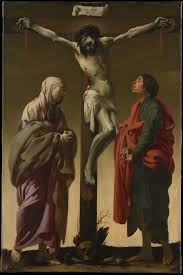 soldiers hit him. Blood flowed down his face when a cruel crown of thorns was jammed on his head. Blood ran down his back as he was mercilessly whipped. Blood dripped from his hands and feet while he hung on the cross. Blood poured out of his body when the sword pierced his side. And God said, “There is no forgiveness of sins without the shedding of blood.”
Paul and the blood Romans 3:25 God presented Christ as a sacrifice of atonement, through the shedding of his blood – to be received by faith. Romans 5:8-10 God demonstrates his own love for us in this: while we were still sinners, Christ died for us. Since we have now been justified by his blood, how much more shall we be saved from God’s wrath through him! For if, while we were God’s enemies, we were reconciled to him through the death of his Son, how much more, having been reconciled, shall we be saved through his life!
Hebrews and the blood Hebrews 9:12-14 Jesus did not enter (the more perfect tabernacle) by means of the blood of goats and calves; but he entered the Most Holy Place once for all by his own blood, thus obtaining eternal redemption. The blood of goats and bulls and the ashes of a heifer sprinkled on those who are ceremonially unclean sanctify them so that they are outwardly clean. How much more, then, will the blood of Christ, who through the eternal Spirit offered himself unblemished to God, cleanse our consciences from acts that lead to death, so that we may serve the living God!
Revelation and the blood Rev. 5:9,10 And they sang a new song, saying, “Worthy are you to take the scroll and to open its seals, for you were slain, and by your blood you ransomed people for God from every tribe and language and people and nation, and you have made them a kingdom and priests to our God, and they shall reign on the earth.”
As we celebrate the first advent of Jesus, with colorfully wrapped gifts under a Christmas tree covered with blinking lights and pretty bows, and as we gaze on the nativity scene with baby Jesus in a manger, surrounded by his parents, shepherds and sheep, it might be good to take a moment and meditate on the fact that the innocent baby laying in the manger, was born to bleed. And because of His Blood, we are forgiven of our sins, and freed from Sin.
***** ***** ***** *****
I am grateful for Shinto, for Buddhism, and for Confucianism. I owe much to these faiths. The fact that I was born with a spirit of reverence, that I have an insatiable craving for values which transcend this earthly life, and that I strive to walk the way of the golden mean, I owe entirely to the influence of those ethnic faiths. Yet these three faiths utterly failed to minister to my heart’s deepest need. I was a pilgrim journeying upon a long, long road that had no turning. I was weary. I was footsore. I wandered through a dark and dismal world where tragedies were thick. Tears were my meat day and night. Buddhism teaches great compassion, but since the beginning of time, who has declared, “this is my blood of the covenant which is poured out for many unto remission of sins”? Toyohiko Kagawa, quoted by John Stott in The Incomparable Christ
Sometimes I see better with my eyes closed.
Often times I speak with my mouth shut.
It’s possible for me to hear things in a silent room.
At times I feel things without touching anything.
I can taste the good without my tongue.
I can read without there being any words.
I go places without moving.
Sometimes I see the light in total darkness.
What can it all mean?
As followers of Jesus, disciples of Christ, spiritual beings, we can experience a lot, learn much and help others without our normal senses. God graciously gives us supernatural senses. Part of our life is lived in another dimension. Thus:
Sometimes I see better with my eyes closed. After my morning Bible reading I close my eyes, and God opens the eyes of my heart to see spiritual truths
Often times I speak with my mouth shut. When my wife or a brother or sister come to me with a problem, with a heartache and pain, many times they just want me to listen to them. They just want to get some stuff off their chest. When I just listen, without trying to be a know-it-all, without uttering empty platitudes or trite sayings, I am silently speaking words of compassion, words of patience and words of peace
It is possible to hear things in a silent room. In solitude and silence, I hear that still, small voice of our loving Heavenly Father saying to my soul, “James, I love you and I want you to be happy.”
At times I feel things without touching anything. I feel joy cooperating with God, peace in my heart and contentment in my soul.
I can taste the good without my tongue. I taste and see that the Lord is good, in my family, in nature and in my community of faith.
I can read without there being any words. I read happiness in the laughter of the children, at the home for needy children, where there used to be tears and sadness.
I go places without moving. I am transported to the foot of the cross when I need forgiveness and into the arms of Jesus when celebrating communion.
Sometimes I see light in total darkness. Praying in my dark room I see the light of God’s love, the lit candle of the revelation of Christ, and the lamp of the Spirits presence.
There is much more to life than our five senses. Sometimes its hard to discover, hard to believe, in the midst of our media saturated lives. T.V., Blu Ray, computer, Kindle, iPad, Smart Phone, i Touch, magazines, newspapers, books – they all overwhelm us, and at the same time can leave us empty, spiritually speaking. To hear the still, small voice of God speaking into our lives, we have to leave the things that thrill our physical senses, and go to a place of silence and solitude,and focus on God and His Word in order to let God “Wow” our spiritual senses.
***** ***** ***** *****
We have some idea, perhaps, what prayer is, but what is meditation? Meditation is the activity of calling to mind, and thinking over, and dwelling on, and applying to oneself, the various things that one knows about the works and ways and purposes and promises of God. Its purpose is to let His truth make its full and proper impact on ones mind and heart. Its effect is to ever humble us, as we contemplate God’s greatness and glory. As we enter more and more deeply into this experience of being humbled, our knowledge of God increases, and with it our peace, our strength, and our joy. God help us that we all may in truth “know the Lord”. J.I. Packer, Knowing God
Related articles
- Roots of Salvation (everydayasceticism.com)
I live in Mexico. The first three days of November, for Catholics, who are the overwhelming majority of people who live in Mexico, is devoted to the dead. The celebration is called “Day of the Dead”, but in reality is three days. The first day they remember infants who have died. The second day is devoted to those who have died in accidents. The third day is for all others who have died. They believe that the dearly departed spirits return to visit their families, thus elaborate shrines are made to warmly receive and honor them. These shrines consist of marigold flowers, sugar cane stalks, candles, and tons of food and beverages, all designed to welcome back the dead. Naturally, the dead don’t eat or drink much, so at the end of three days the living feast on the food and drink, or donate it to homes for needy children like the one I serve at in Oaxaca,Mexico.
I too, have been thinking about the dead these last few days. Especially one person in particular. This man was sentenced to death unfairly, and before he was executed, he was tortured mercilessly. As he was dying, he uttered these incredible words, “Father, forgive them, for they know not what they do (Luke 23:34).” This man was Jesus.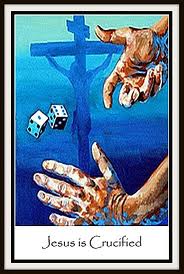
I have been thinking a lot about those words. Those almost unbelievable words of compassion and mercy, “Father, forgive them, for they know not what they do.” In the midst of His unbearable pain and suffering, he found a place in His heart to forgive them, because he knew that they were acting out of ignorance.
Last week I was helping to move concrete, in a wheel barrow, from the concrete mixer to the foundation of the elementary school that we are building. My job was to place my wheel barrow close to the mixer, so that the guy operating the mixer could fill it. When the concrete falls into the wheel barrow, it slashes concrete all around something terrible, so I turn my back to avoid concrete splashing in my face. On that particular day, I was wearing an old t-shirt, the back of which was more holes than fabric. I think the guy operating the mixer, and his accomplice must have been looking at my backside with amusement and lost track of the job at hand, because the next thing I knew, concrete was spilling out of the wheel barrow and onto my pants and shoes. Quickly the error was corrected and the guy apologized. As I began trundling my wheel barrow towards the foundation, I thought of Christ’s words, “Forgive them, for they know not what they do.”
Jesus talked a lot about forgiveness. Peter asked Jesus how often he needed to forgive someone who offended him or sinned against him. Seven times? Peter thought he was being generous. Jesus told him 77 times in one account, and 70 times seven in another account. What Jesus was saying was that there is no limit to the number of times we must forgive those who sin against us. In the Lord’s prayer Jesus teaches us to pray, “forgive us our sins as we forgive those who sin against us.” To be sure that we understand the concept, Jesus goes on to say, “if you don’t forgive those who sin against you, your Father in the heavens will not forgive you.” Not a lot of wiggle room there!
Even the meaning of Jesus’ name suggests forgiveness of sin. The angel told Mary to name her baby Jesus, “for he will save his people from their sins.” In order to be saved from our sins we must be forgiven from our sins. To be forgiven we must forgive. When someone offends us or hurts us or sins against us, we must pray “Father, forgive them, for they know not what they do.”
When we offend others, hurt others and sin against others, we must not only ask their forgiveness, but God’s forgiveness, because all sin is ultimately against God, as David shows us in the 51st Psalm. We pray to God “Forgive us, because we know not what we do.”
In reality we really don’t know what a horrible offense our sin is before God when we commit it. When we hurt someone, we are really acting in ignorance because we have no true idea how much pain they suffer because of our action. It would not be entirely out of place to say to those that we have hurt, “Forgive me, for I did not really know (in every sense of the word KNOW), what I was doing.” Paul writes in 1 Timothy 1:13, “Even though I was once a blasphemer and a persecutor and a violent man, I was shown mercy because I acted in ignorance and unbelief.” In verse 15 he writes, “Christ Jesus came into the world to save sinners – of whom I am the worst.”
What a great example of someone who caused a lot of people a lot of pain and suffering, and God looked down on him as the ignorant sinner that he was, and forgave him. There is hope and a promise for you and me as well.
When we die we will not go back to enjoy a meal with relatives on earth, but we will stand before the Eternal Judge. If we have forgiven those who have sinned against us, and have accepted God’s good gift of forgiveness, then we will hear those pleasant words, “Well done good and faithful servant. Enter into the joy of your Lord.”
***** ***** ***** *****
We may learn from this prayer: (Father, forgive them, for they know not what they do.)
1. The duty of praying for our enemies, even when they are endeavoring most to injure us.
2. The thing for which we should pray for them is that “God” would pardon them and give them better minds.
3. The power and excellence of the Christian religion. No other religion “teaches” people to pray for the forgiveness of enemies; no other “disposes” them to do it. Men of the world seek for “revenge;” the Christian bears reproaches and persecutions with patience, and prays that God would pardon those who injure them, and save them from their sins.
4. The greatest sinners, through the intercession of Jesus, may obtain pardon. God heard him, and still hears him “always,” and there is no reason to doubt that many of his enemies and murderers obtained forgiveness and life.
Barnes notes on the Bible
I have been thinking a lot lately about the hedge that protects. I think it is a subject that most Christians give little thought to, but is a subject that is indispensable to living a happy life.
The words “hedge of protection”, as far as I can tell, are only found in the book of Job, but the concept permeates the scriptures. In the book of Job, we find that the man Job is a righteous man and a wealthy man. Perhaps the richest man in the world at that time. Satan pays a heavenly visit to God and God points out the righteous life of Job. Satan is not impressed and exclaims, “Does he not serve you with good reason? You, God, have put a hedge of protection around him. Take that hedge down, and let me have my way with him, and he will curse you!”
God doesn’t hedge his bet, but removes the hedge, and we all know the tragedies, heartache and suffering that Job went on to endure.
I believe most Christians cringe when they think about all that Job had to go through once the hedge of protection was removed. I know I do. The last thing I want to see happen is God’s hedge of protection taken away from me. I hate pain and suffering of any kind, whether it be physical, emotional or spiritual. I guess we all do. God realizes that, thus, in the Lord’s prayer, Jesus instructs us to pray, in the King James version, and most versions, “lead us not into temptation, but deliver us from the Evil One.”
Dallas Willard, and other Bible scholars say that God never leads us into temptation, and that a better translation would be “save us from the time of trial and deliver us from the Evil One.” The idea here is that we we go through times of trial, times of trouble, times of pain, we are tempted to sin by despair, worry, anger, or rejecting God. When things are going well we are less likely be tempted to sin in these ways.
When we pray the Lord’s Prayer, we are really asking God to keep his hedge of protection around us. We are asking God to keep us safe in our travels, secure in our jobs, strong in health and surrounded by angels. Which we desperately need, because our enemy, the devil, is constantly on the prowl like a lion, seeking to devour us, destroy us and kill us.
I think of the hedge of protection much like I think of the sheep pens of Jesus time. A rock wall that kept the sheep safe at  night from wolves, bears and lions. I’ve heard that the shepherd slept in the doorway to the sheep pen to protect the sheep from intruders and thieves, thus Jesus says, “I am the door.” Jesus is an important part of our hedge of protection.
Sometimes we suffer for lack of the hedge. As noted earlier with Job, sometimes God himself removes the hedge to show up the devil and to show the world and to show us that we do not worship and ultimately trust the hedge of protection, but the God of the hedge.
Another reason that the hedge doesn’t always protect us, is that we climb over the hedge. We leave it. We don’t like boundaries. We we want to be free. The prodigal son was like that. He had super hedge at his father’s house, but he didn’t want to be hedged in, so he left, and outside the hedge he suffered much.
When we deliberately sin, we voluntarily leave our loving Heavenly Father’s hedge of protection and suffer the consequences. In the Lord’s Prayer, Jesus also tells us to pray that the Father’s will be done on earth as it is in heaven. When we are inside God’s will, we are most likely inside the hedge.
I am not saying that anytime a Christian suffers he or she is outside the will of God, but I am saying that God loves us and wants us to happy, and as a general principle we are happier doing His Will, and living inside the hedge. Sometimes we do suffer the effects of other people’s sinful choices or the attacks of Satan, while inside the hedge, and it is during these times that we can sing out like Martin Luther, “A mighty fortress is our God, a bulwark never failing.”
***** ***** ***** *****
A mighty fortress is our God, a bulwark never failing;
Our helper He, amid the flood of mortal ills prevailing:
For still our ancient foe doth seek to work us woe;
His craft and power are great, and, armed with cruel hate,
On earth is not his equal.
Martin Luther
It is better to go to the house of mourning than to go to the house of feasting, for this is the end of all mankind, and the living will lay it to heart. Ecclesiastes 7:2
I recently went to a house of mourning. A neighbor of the mission died of a heart attack. His friends called him Toto. He was in his forties. He was a taxi driver. A real nice guy. Occasionally I would get rides from him, and sometimes he wouldn’t charge me. I did not go because we were such great friends, but because his wife, Guermina, used to work at the mission as a cook. My wife, Anita, who is a cook at the mission, was friends with her, as were others here. Toto left behind his wife, a son, and three daughters.
Sunday morning before church, Anita and I walked down the road to the house of mourning. In this part of Mexico, when someone dies, a large tarp, resembling a circus tent is erected in the front yard, and this was no exception. It was clearly visible as we made our way down the road. Walking into the yard, we were greeted by Guermina’s mother. Anita hugged her and I shook her hand. There were staff members from the mission there helping out. Mainly helping with the cooking and serving of food. At any special occasion in Oaxaca,Mexico, whether it be a baptism, wedding or funeral, there is always the large tent, tables, chairs, and lots of food.
We went into the house of mourning, and there was the widow and her children, flowers, candles and an open casket. Anita and I hugged Gueremina. Anita hugged the daughters. Anita told me that when you go to the house of mourning, you either bring white flowers or food or money, or all three. We brought some money that I was supposed to give to the widow when offering condolences. I forgot. After Anita looked in the casket, we went out of the house and sat at one of the tables under the tent. Enrique, the mission’s prison minister, who also lives a short distant from the bereaved, brought us bread and hot chocolate, a standard at all Oaxacan “events”. It was then that I realized I had forgotten to give the money to Gueremina. I told Anita. She wasn’t pleased.
We ate a bit of our bread and drank our chocolate. They had also brought us some beef soup. At these events they always give you more than you can eat, and knowing that they also thoughtfully provide “doggie bags”; plastic bags that you can put the uneaten portions in. At wedding celebrations they often supply buckets since they give you so much. After putting our bread and soup in bags, we made our way back into the house of mourning to say goodbye and to give me a chance to give the widow our humble gift.
Ian and Elaine are workers at the mission. They are from Canada and have been there longer than any other North Americans. They were the ones that initially hired Anita and Gueremina as cooks, and Elaine was especially close to Gueremina. They picked us up later that afternoon and drove us to the funeral.
We went across the highway that seperates Gueremina’s house from the little town of Tanivet, where Toto was to be buried. There was a very long line of cars, trucks and taxi’s that made it’s way to Tanivet. In Tanivet, the procession stopped at Toto’s father’s house for a few minutes, and then continued down the street to a small Catholic church. A band led the mourners, playing what seemed more like a lively polka than a dirge for the dead. Family members and friends following behind, carried the casket on their shoulders . The little church soon filled up, and a lot of people just waited outside. Ian, Elaine, Anita and I found a place to stand at the back during the funeral service.
I didn’t understand everything the Priest said during the mass for the dead, but I know he mentioned sins and forgiveness a few times. I think that is a good theme for a funeral service. I think that is one reason why the writer of Ecclesiastes says that it is better to go to the house of mourning than a house of feasting. Normally at a house of feasting, at a party, you have fun, get full and go home. What goes on at a house of mourning is deeper, more significant, At the house of mourning, or a funeral, you are more apt to think about your own eventual demise. You think about the meaning of life and your purpose on this planet. You think about sins and forgiveness and getting into heaven and what is required. A Christian’s thoughts, I think, turn toward the work of Christ on the cross, the resurrection and what was accomplished by those deeds. A Christian puts his or her faith in the atoning work of Jesus for salvation from the power of Sin, and for forgiveness of sins. A Christian can celebrate the death of a loved one who has put their trust in God for eternal life, knowing that that loved one is in the immediate presence of Jesus, and is happier now than at any point in their existence this side of paradise. A Christian can look forward to the day when their body is in the casket, but their soul is with Christ.
After the funeral service we walked about a mile down a long, dusty road to the cemetery. Everything got a little crazy as we got to the cemetery. Three taxi drivers were honking their taxi’s horns. There was a mound of dirt beside the grave. Young men drinking beer and smoking cigarettes were close to the hole. I looked around and saw older men standing behind the scene, filling plastic cups with mescal, strong drink like tequila. Some people had tears in their eyes, others had smiles on their faces, and others simply looked about with a kind of oblivious, blank stare. A grief stricken daughter started screaming for her papa, and had to be restrained by family members. As the casket got closer to the hole in the ground, Gueremina’s tears flowed freer than I had seen before. The family had trouble taking their place beside the grave since such a crowd was pressed in, wanting a good view. Those carrying the casket set it on some ropes on top of the mound of dirt beside the grave. At this point the priest and people shushed the band to quiet down. The priest said a few words, and then a few of the drunken men tried to speak some nice words about Toto. Then the casket was precariously lifted up by men holding on to the ropes, and slowly lowered into the hole. One of the men put a six-pack of beer in the grave. Another person handed Gueremina a large, clear, plastic bag full of Toto’s clothes; and then another one, ostensibly to accompany him into the great beyond. Finally an uncle started shoveling dirt into the grave site, and then the son grabbed a shovel and added a few shovel fulls. People close to the grave dropped handfuls of dirt on the casket.
At last it was over, and people began making their way back to their cars; some staggering and being helped by friends. Ian had gone back early for the car and drove it close to the cemetery, for which we were all grateful, for two reasons. One, so that we didn’t have to make the long trek back into town on foot, and two, so that we could be out of there before the intoxicated men got behind the wheels.
On the way back to the mission I pondered my time spent at the house of mourning. Death slaps us in the face – especially the sudden death of a relatively young man. It reminds us of our earthly mortality, How do we deal with that? Some people try to drown the certainty of death with alcohol or drugs. Others bury themselves in work or good works, hoping to make it to heaven by their own merit. Others are confident that God loves them and wants them to be happy, and has taken away the sting of death with a true and sure promise of an eternity of enjoying God.
***** ***** ***** *****
The resurrection of Christ has determined our existence for all time and eternity. We do not merely live out our length of days and then have the hope of resurrection as an addendum; rather, as Paul makes plain, Christ’s resurrection has set in motion a chain of inexorable events that absolutely determines our present and our future. Christ is the firstfruits of those who are his, who will be raised at his coming. That ought both to reform the way we currently live and to reshape our worship into seasons of unbridled rejoicing. Gordon D. Fee in The First Epistle to the Corinthians
 To Enjoy God